Place and season
The garden and its seasons
A tea house is built to be seen with its garden. How the roji, wabi and the seasons shape a Kyoto tea ceremony, and when to book.
Book the garden tea ceremony ↗Quick answer
A tea house is built to be seen with its garden. Wikipedia describes the garden path to a tea house, the roji, as part of the setting, and the organiser describes this garden as designed by Ogawa Jihei VII and changing with the seasons: blossom in spring, fresh green maple in summer, crimson and gold leaves in autumn and snow in winter. The ceremony takes place rain or shine.
The tea room and the roji
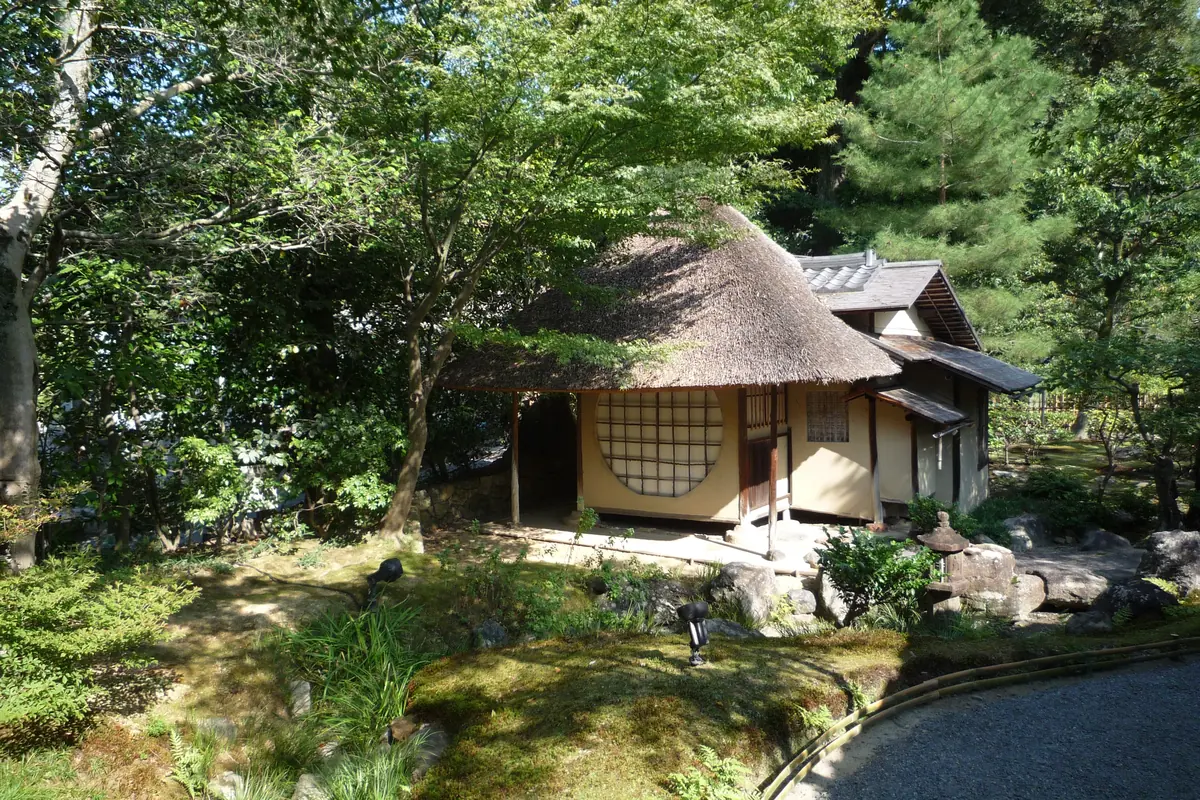
Wikipedia says typical features of a chashitsu are shōji windows and sliding doors, tatami mat floors, a tokonoma alcove and simple, subdued colours. Tea houses are usually small wooden buildings in the gardens or grounds of private homes, temples, museums and parks, and the term can extend to the roji, the garden path leading to the tea room. Larger tea houses add a garden with a roji path and an outdoor waiting area for guests. At a formal gathering guests wait outdoors in the roji and wash at a stone basin before they enter the tea room, so the garden is the first part of the ceremony.
Wabi in the garden
Wikipedia describes wabi as quiet or sober refinement, characterised by humility, restraint, simplicity, naturalism, imperfection and asymmetry. In the tea setting it values simple, unadorned objects and architectural space. Rikyū developed chabana, the simple flower arrangement of tea rooms, and is said to have taught that the flowers should give the impression they would give if still growing outdoors. Out-of-season materials are never used.
The designer named by the organiser
The organiser credits the garden to the landscape artist Ogawa Jihei VII. Wikipedia describes him as a garden architect of the Meiji and Taishō eras whose family title, Ueji, passed to the heads of a Kyoto gardening house that still operates. It says his gardens drew on the borrowed scenery of the Higashiyama hills, on water drawn from the Lake Biwa Canal or the Shirakawa river, and on the roji as one component. The page is general background on the designer and describes no particular stone here.
Four seasons, in the organiser's words
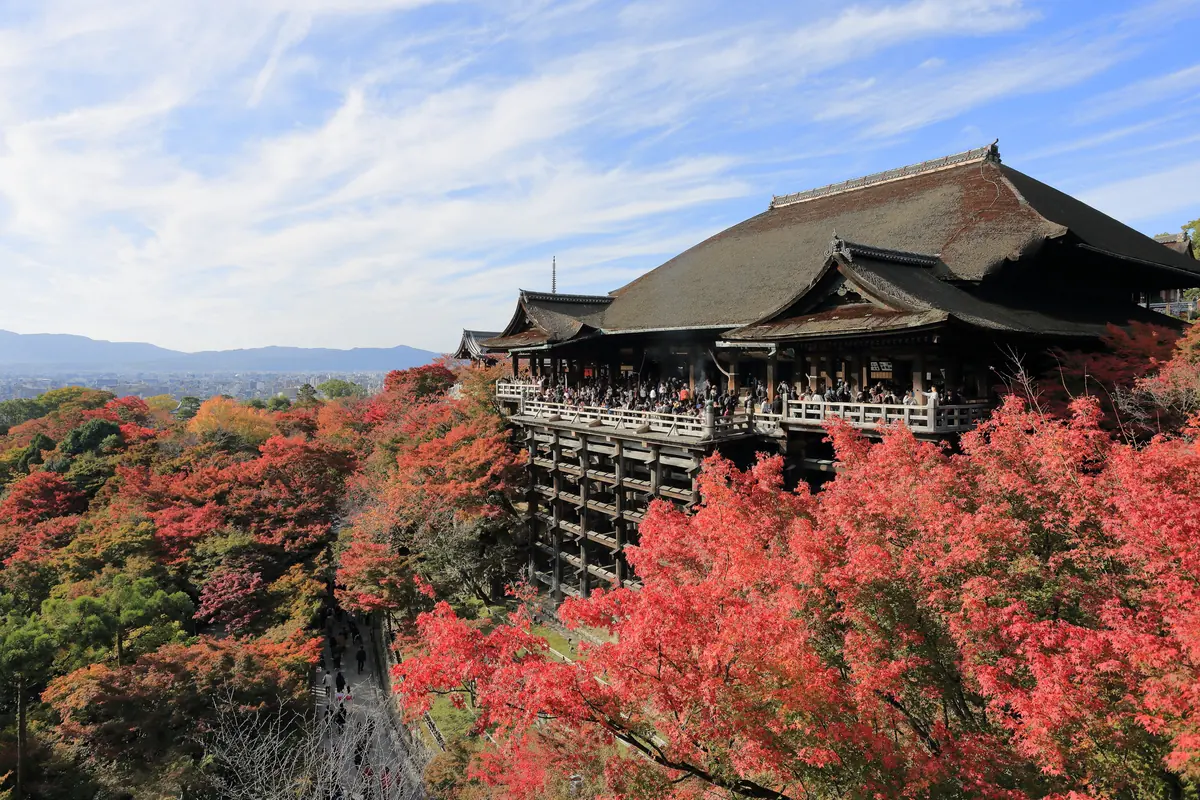
The organiser describes the garden by season. Spring brings soft blossom drifting across it, and the cherry blossom season is called highly recommended. Summer brings fresh green maple leaves. Autumn frames the view with crimson and gold, and winter shows steam rising from the bowl over a snow-dusted garden, which the organiser calls its own masterpiece. Kiyomizu-dera's website describes similar seasons on the mountain above: cherry blossoms in spring, lush green in summer, coloured leaves in autumn and snowscapes in winter.
Seasons inside the ceremony
Wikipedia says seasonality is important to the ceremony. Practitioners traditionally divide the year into a sunken hearth season for the colder months, traditionally November to April, and a brazier season for the warmer months, May to October. Guests drink from a deeper, cylindrical bowl in winter to keep in heat and a flat bowl in summer to release it, and flowers subtly reflect the season. The sweet follows the same rule: Kyoto's tourism association says its shape and colour depict the season.
Choosing a season
Kyoto's tourism association says the Kiyomizu area is very crowded, and asks for extra care in the cherry blossom and autumn foliage seasons, so expect busier lanes on the way to the tea house in those weeks. The organiser says the ceremony takes place rain or shine, and calls a snow-covered garden a masterpiece of its own. If crowds bother you, a green summer or a quiet winter date is a fair choice. The calendar marks which dates are open.
Frequently asked questions
Which season is best for the garden?
The organiser describes all four, and recommends cherry blossom season highly. The lanes are busiest in the blossom and autumn foliage seasons, according to Kyoto's tourism association.
What is a roji?
The garden path leading to a tea room, according to Wikipedia, often with an outdoor waiting area for guests.
Does the ceremony run in rain?
Yes. The organiser says it takes place rain or shine.
Who designed the garden?
The organiser credits the landscape designer Ogawa Jihei VII.
Sources