The short answer
What happens at a tea ceremony
What happens at a tea ceremony in Kyoto, and do you need to know the etiquette first? The hour step by step, the few habits worth knowing and the limits.
Book the garden tea ceremony ↗Quick answer
A host prepares matcha in front of you in a set order, you eat a small sweet, then you drink the bowl and ask questions. At the garden tea house near Kiyomizu-dera you also whisk a second bowl yourself. You do not need to know the etiquette beforehand: Japan's national tourism organisation says minor faux pas are always overlooked, and the tea master coaches you through the bowl you make.
What a Kyoto tea ceremony is
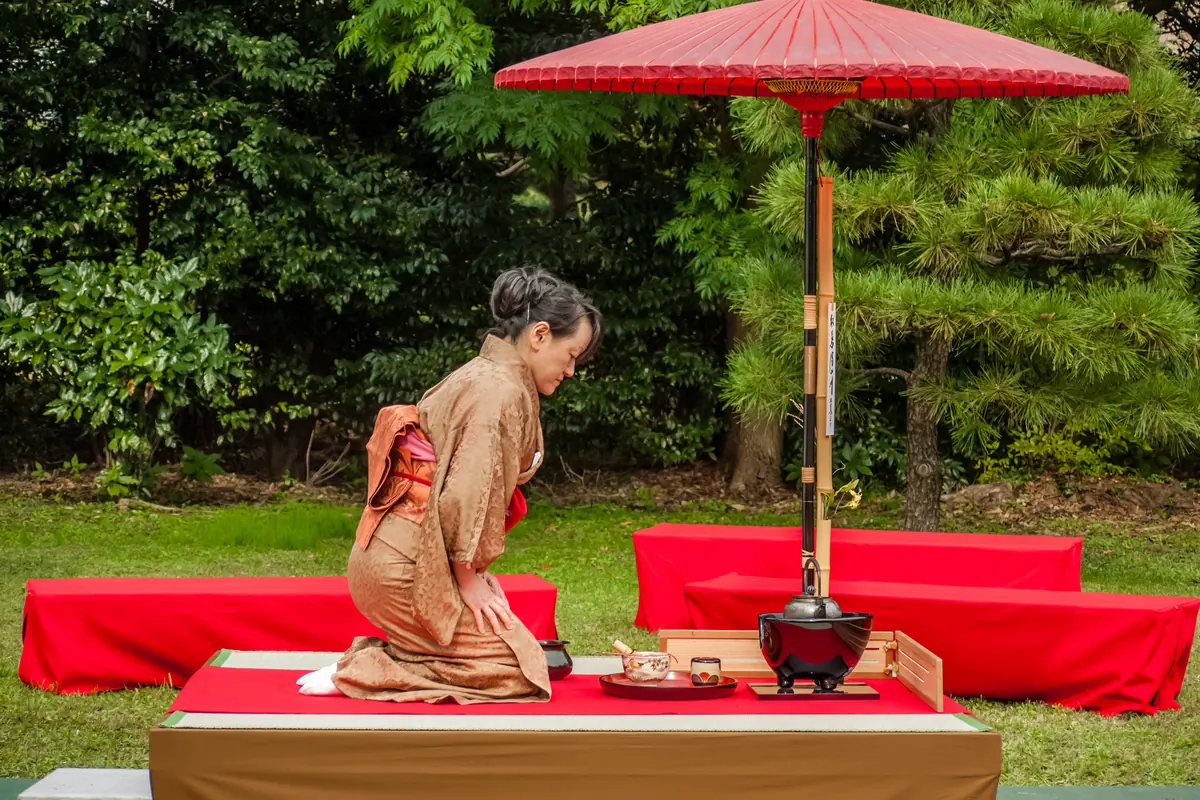
The tea ceremony is known in Japanese as chanoyu or sado, the way of tea. Japan's national tourism organisation describes it as a simple task, preparing a drink for a guest, raised to an art form, and as a small-scale expression of omotenashi, which means looking after guests wholeheartedly. The centrepiece is matcha, a powdered green tea, prepared by the host in a fixed order of movements called temae. A guest's job is mostly to receive: to watch, to drink and to say thank you.
Where the ritual comes from
Wikipedia traces whisked powdered tea to the monk Eisai, who brought it to Japan from China around the end of the twelfth century, and says Buddhist monasteries first used it in religious rituals. The ceremony took its modern form in the sixteenth century through Sen no Rikyū, who favoured rustic simplicity, a much smaller tea house and the aesthetic of wabi. Japan's tourism organisation lists four principles that he set out for the ceremony: harmony, respect, purity and tranquility. The guide to Sen no Rikyū and the schools tells the story in full.
Read next: Sen no Rikyū and the schools
A full gathering and the hour you book
A formal tea gathering, a chaji, usually includes a full kaiseki meal followed by thick and thin tea, and Wikipedia says it may last up to four hours. A chakai is a simpler gathering of sweets and thin tea. Japan's tourism organisation notes that many venues offer abbreviated versions that may suit foreign guests better, and this tea house is one of them: the organiser puts the ceremony at 50 minutes to an hour. Expect an introduction to tea, not the full formality of a chaji.
The hour at the tea house, step by step
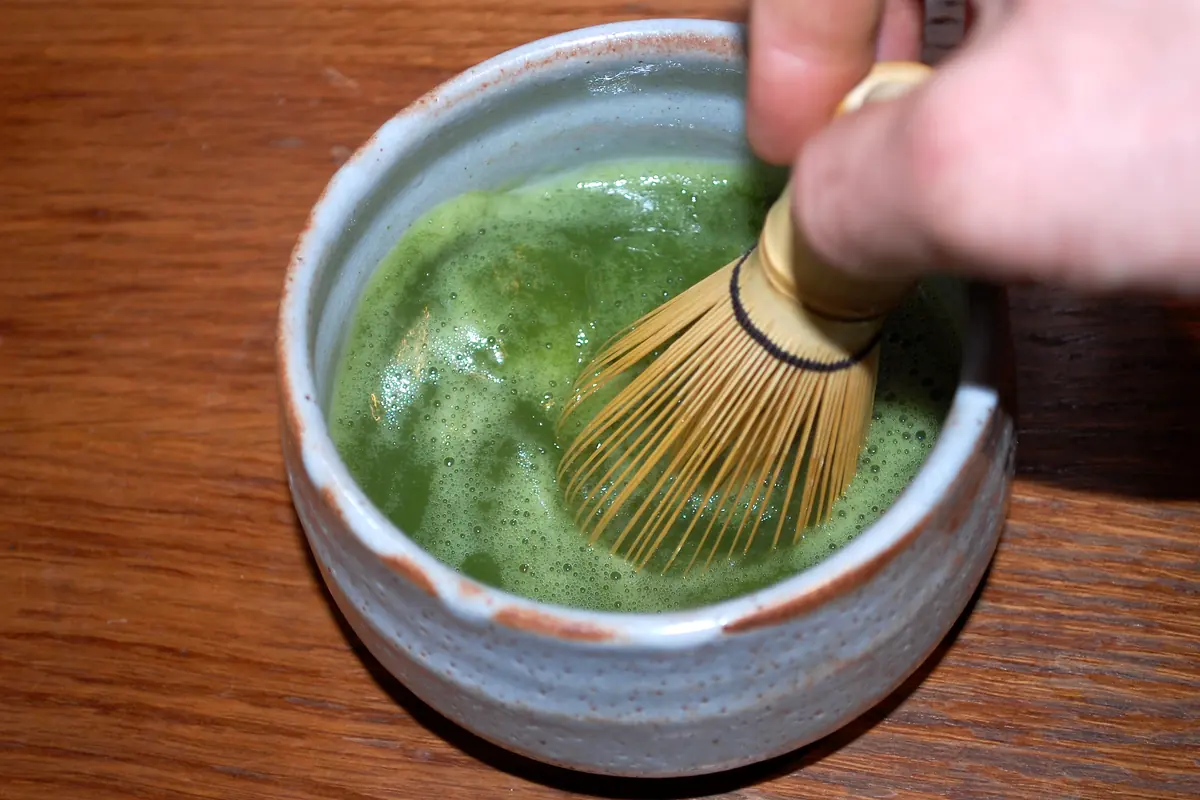
The organiser describes one sequence for every group, and the calendar lists each day's starting times. A tea master performs the ceremony, and the second half turns hands-on. Two cups of matcha from Uji are included, one made by the host and one made by you, so the list below is the whole of the hour, in the order the organiser gives it:
- A guide welcomes you and introduces the garden, which the organiser credits to the landscape designer Ogawa Jihei VII.
- A short talk covers the philosophy and traditions behind the ceremony.
- The tea master prepares matcha while you watch.
- You drink a bowl of that matcha with a traditional Japanese sweet.
- You whisk and prepare a bowl of your own, with the tea master guiding you.
- A question session follows, then a group photo with the garden behind you.
Your own bowl, and the tools
The second half of the hour is the part visitors remember. Wikipedia explains that the whisk, the chasen, is carved from a single piece of bamboo, that the tea scoop, the chashaku, measures powder from the caddy into the bowl, and that matcha is whipped with hot water to make thin tea. At this tea house the tea master guides you as you whisk and prepare a bowl of your own, and you drink it. The organiser lists the second cup as one made by you, so you taste your own work.
Do you need to know the etiquette?
No. Japan's tourism organisation says anyone given the chance to attend a tea ceremony should try to follow the proper moves, and also that minor faux pas are always overlooked. It adds that rituals staged to demonstrate the procedure for visitors do not require formal attire. At this tea house the tea master coaches you through the bowl you make yourself, so arriving curious matters more than arriving with a script. The next section lists the few habits worth knowing.
Five habits worth knowing
These come from Japan's tourism organisation and the tea schools. Dozens of schools exist, each with subtle differences, so the host's instructions always win over any list, including this one. The tourism organisation also says the tea is drunk in roughly three sips, the last ideally ending with an audible sound that tells the host you enjoyed it. The habits are small, and none of them needs practice:
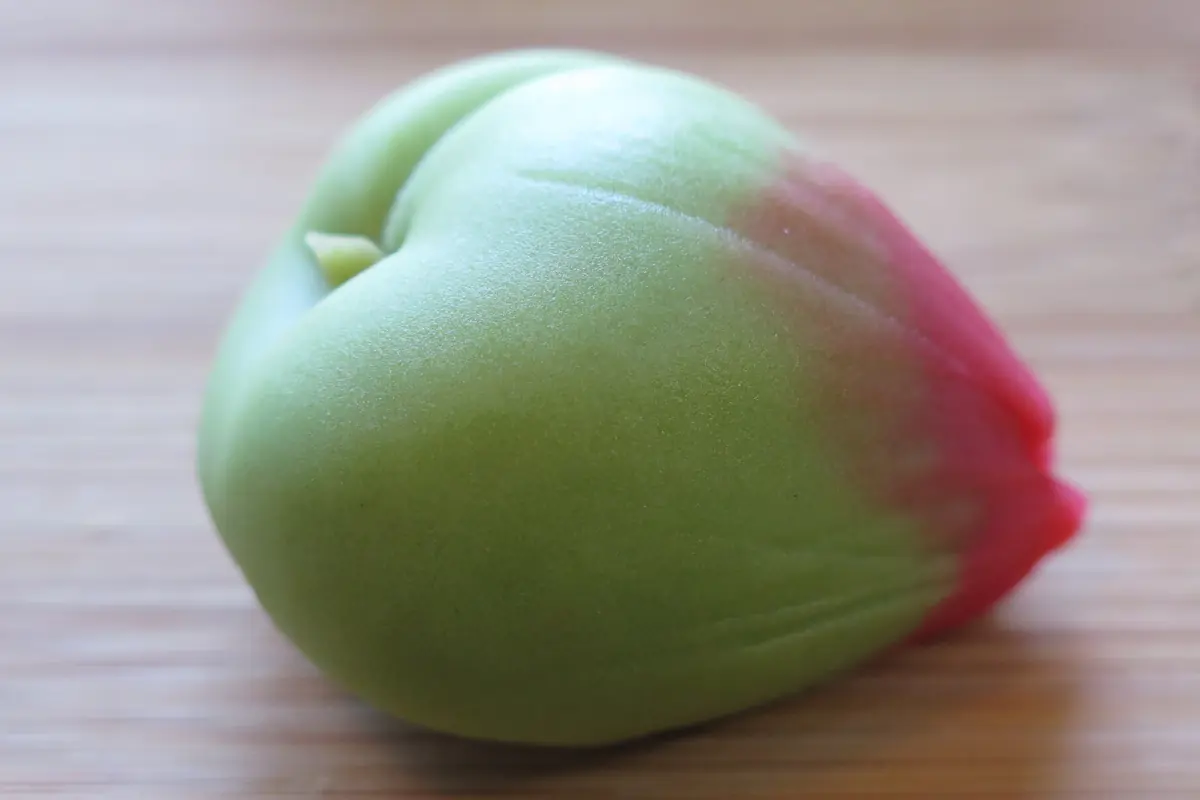
- Eat the sweet first. The wagashi is eaten before the tea is served, so its sweetness meets the tea's gentle bitterness instead of cancelling it.
- Bow to the host before you drink. Omotesenke's own etiquette pages describe guests bowing to each other, then bowing to the host, before a bowl is drunk.
- Raise the bowl and turn it slightly, so that you do not drink from its front. Then take a sip.
- Praise the tea and the bowl with a few words. The tourism organisation says guests are expected to compliment the taste and the bowl.
- After drinking, turn the bowl back to its original position and admire it briefly before you set it down.
Words you may hear
A few Japanese terms come up at any tea ceremony, and Wikipedia and Japan's tourism organisation define them. None needs to be memorised, and the host will usually say each one as it arrives. They matter mainly because hearing them in the right place makes the sequence easier to follow, and because they appear on booking pages, in museum labels and in tea shops across Kyoto:
- Temae: the procedure for preparing and serving the tea.
- Chawan: the tea bowl, and chasen: the bamboo whisk.
- Wagashi: the traditional sweet eaten before the tea.
- Chashitsu: a tea room, with a tatami floor and an alcove.
- Omotenashi: looking after guests wholeheartedly.
Kneeling, chairs and what to wear
A formal ceremony seats guests kneeling in the seiza position, according to Japan's tourism organisation, and the tea master traditionally wears kimono. Wikipedia adds that clothing at a tea gathering is usually subdued and conservative, so as not to distract. If kneeling is hard for you, tell the host on arrival and ask what is possible. Tea in chairs, called ryūrei, exists for this reason: Wikipedia says it began in the Urasenke school for non-Japanese guests who were thought to be more comfortable seated. Card two on this site is a Gion tea ceremony offered in chairs.
What this tea house does not offer
Three limits come with the booking, and the organiser states them plainly. Kimono rental is not available at Sakaguchian, the provider. Children aged 7 and under cannot enter. Large bags and luggage are not permitted inside. The tea ceremony itself takes place rain or shine, and private groups or small groups can book. If any of these limits rules out your plan, a Gion ceremony in chairs or a kimono tea ceremony may fit better, and both appear as cards on this site.
Who this isn't for
A formal chaji, with its meal and thick tea, runs for hours, and this is not that. Anyone who wants a long, silent, strictly formal ceremony will find the hour closer to a demonstration with a hands-on bowl. Travellers who want to wear a kimono need a different ticket, families with a child aged 7 or under cannot join, and anyone travelling with a suitcase must leave it elsewhere. Some visitors also find the time short, so choose another option if you want long lessons.
Frequently asked questions
What happens at a tea ceremony in Kyoto?
A host prepares matcha in front of you in a set order, you eat a small sweet, then drink the tea. At this tea house you also whisk a second bowl yourself, ask questions and have a group photo.
Do I need to know tea ceremony etiquette?
No. Japan's tourism organisation says minor faux pas are always overlooked. The habits worth knowing are small: eat the sweet first, raise and turn the bowl, and thank the host.
How long does a tea ceremony take?
A formal chaji can last up to four hours, according to Wikipedia. The tea house this site covers runs about 50 minutes to an hour, according to the organiser.
Do I have to sit on the floor?
A formal ceremony seats guests kneeling on tatami, so expect that. If it is hard for you, tell the host on arrival. A Gion tea ceremony on this site's booking cards is offered in chairs.
Is a photo included?
Yes. A photo is part of the ticket, taken with your group and the garden behind you.
Can children come?
Children aged 7 and under cannot enter this tea house, so a family with a younger child needs another plan for the hour.
Sources
- Japan National Tourism Organization: Japanese tea ceremony
- Japan National Tourism Organization: The definitive Japanese tea experience
- Omotesenke Fushin'an Foundation: Forms and behavior
- Kyoto City Tourism Association: Enjoying Kyogashi, the traditional sweets of Kyoto
- Wikipedia: Japanese tea ceremony
- Wikipedia: Matcha