Etiquette, simply
Tea etiquette for first timers
The tea ceremony etiquette a first-timer needs in Kyoto: the sweet before the tea, bowing, turning the bowl, thanking the host, and what to leave to the host.
Book the garden tea ceremony ↗Quick answer
At a visitor tea ceremony three things matter: eat the sweet before the tea, turn the bowl so you do not drink from its front, and thank the host. The host will show you the rest. Japan's tourism organisation says minor faux pas are always overlooked, and tea schools differ in small details, so follow the host's lead rather than a rulebook.
Etiquette in tea is called kata
The Omotesenke school's own pages explain that when a clear etiquette is repeated between host and guests, forms called kata appear for each kind of action. Its example is a bow: before drinking, guests bow to each other and then bow politely to the host, to show gratitude. The school says the forms became an expression of the spirit of host and guests. So etiquette in tea is less a test than a shared way of saying thank you, and a first-timer who does it sincerely and imperfectly is still doing it.
Before you sit
Japan's tourism organisation says guests take off their shoes before being shown into the waiting room of a tea house. At a formal gathering they also wash their hands and rinse their mouths at a stone basin, then comment on the scroll in the alcove or the seasonal flowers. Wikipedia adds that on tatami one walks without stepping on the joins between mats, which would damage them. A visitor session may skip the basin, but the habit of slowing down and looking around is what the ceremony asks for.
The sweet comes first
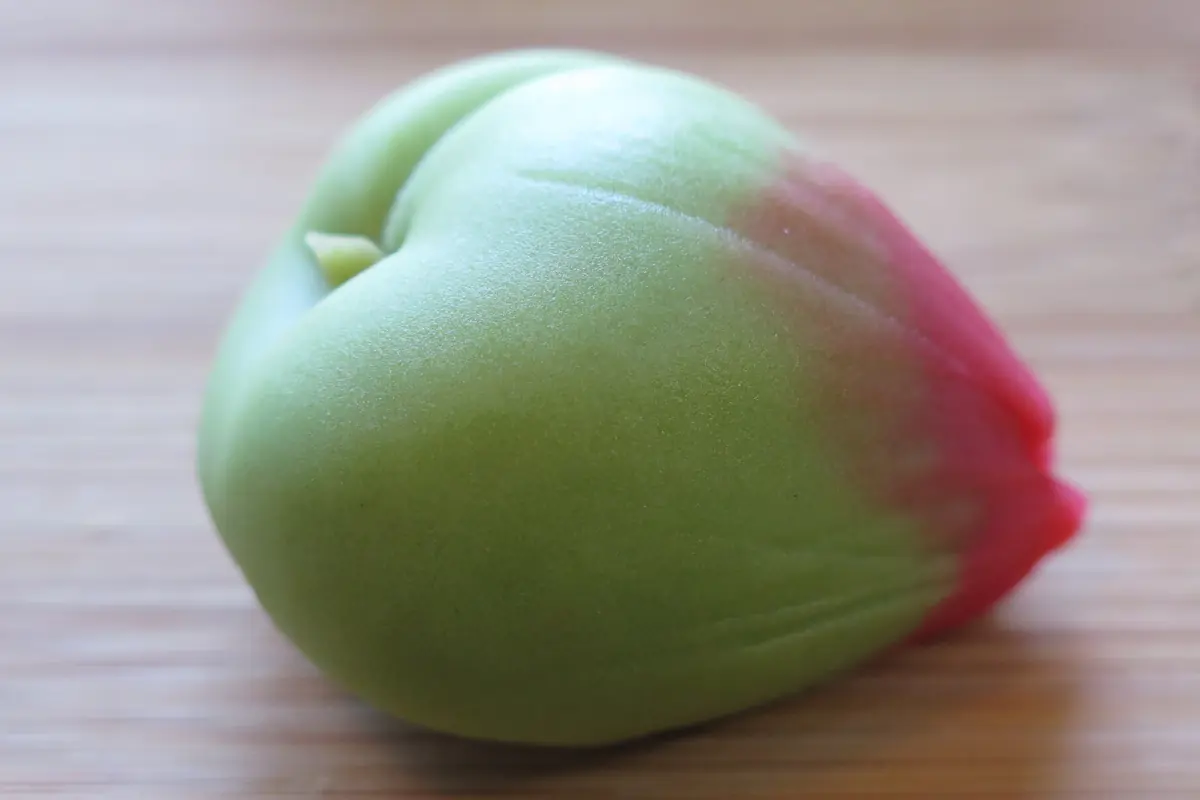
Before the tea is served, a seasonal wagashi is eaten to prepare the palate, Japan's tourism organisation says, in contrast to European high tea where the two are taken together. The sweetness sits against the tea's gentle bitterness instead of cancelling it. Kyoto's tourism association adds that when sweets arrive on a shared dish, guests first exchange a bow with the people beside them, then serve themselves using a sheet of kaishi paper as a plate. It also suggests asking the name of the sweet, because its shape and colour depict the season.
Read next: Matcha and wagashi explained
Receiving and turning the bowl
Japan's tourism organisation describes the guest raising the bowl as a mark of respect to the host, rotating it slightly to avoid drinking from the front, taking a sip, and then complimenting the host on the taste and the bowl. How far to rotate it varies. Omotesenke's pages list turning the bowl twice and avoiding its front, so a host from that school may show you two turns, while another may show one. The principle stays the same: the front of the bowl faces the host and your lips do not touch it.
Drinking and giving the bowl back
Matcha is drunk in roughly three sips, the last ideally ending with an audible sound that tells the host you enjoyed it, and the bowl is then rotated back to its original orientation, briefly admired and set down, according to Japan's tourism organisation. Wikipedia notes that irregularities and imperfections in a bowl are prized and often featured as its front, so looking at the shape and glaze is part of the courtesy. In a full gathering one bowl of thick tea is passed among several guests, who wipe the rim before handing it on, while the thin tea that follows is served to each guest in an individual bowl.
What a first-timer can safely skip
Japan's tourism organisation says rituals staged to demonstrate the procedure for visitors do not require formal attire, and that the tea master will wear kimono for the ceremony. Nobody expects you to know the movements of the schools, which differ in the details. Ask a question when you are invited to, thank the host at the end, and ask before photographing other guests or the host. When the host shows you something different from this page, the host is right, because it is the host's room.
Frequently asked questions
What is the one thing to remember?
Eat the sweet before the tea. After that, turn the bowl so you do not drink from its front, and thank the host. The host shows you everything else.
How many times do I turn the bowl?
It varies by school. Japan's tourism organisation says to rotate it slightly, while Omotesenke's pages list turning it twice. Copy what your host shows you.
Do I bow?
Yes, a small bow to the host before drinking is the custom, and Omotesenke's pages describe guests bowing to each other first. The host will show you the form.
What if I make a mistake?
Japan's tourism organisation says minor faux pas are always overlooked. Hosts expect visitors to be learning.
Sources